About George
Born in New York in 1951, George came to Hollywood in the late 1950s with his mother, prominent Hungarian actress Elissa Czobor Donig.
After graduating from Hollywood High, George studied physics and engineering at UC Berkeley and became an extremely skilled software engineer. In 1976, he continued his studies at UCLA, completing advanced short courses on numerical and asymptotic techniques for electromagnetics and antennas. His expertise was later sought after by NASA, Microsoft, and IBM.
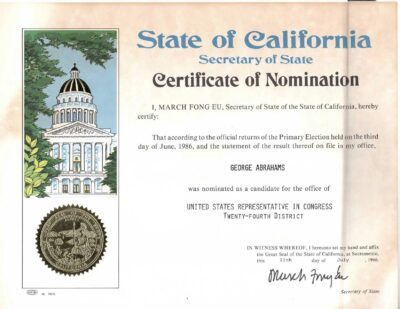
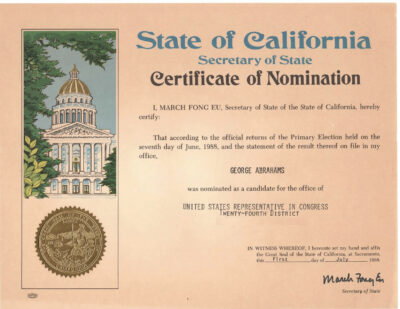
George’s commitment to public service began in 1982, when he ran for Los Angeles County Supervisor 3rd District on a platform of human rights and individual conscience. He was recognized by the California Secretary of State as a candidate for the US Representative in the 24th Congressional District in 1986 and ran again in 1988.
George was brilliant, fearless, selfless, and caring. He worked to improve Los Angeles, particularly his beloved Hollywood, by defending the environment and insisting on accountability from City, County and State government.
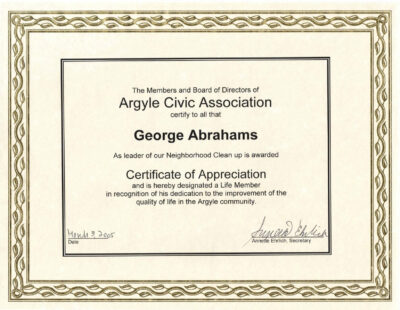
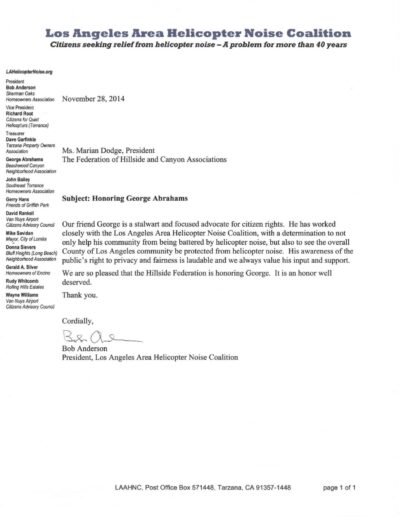
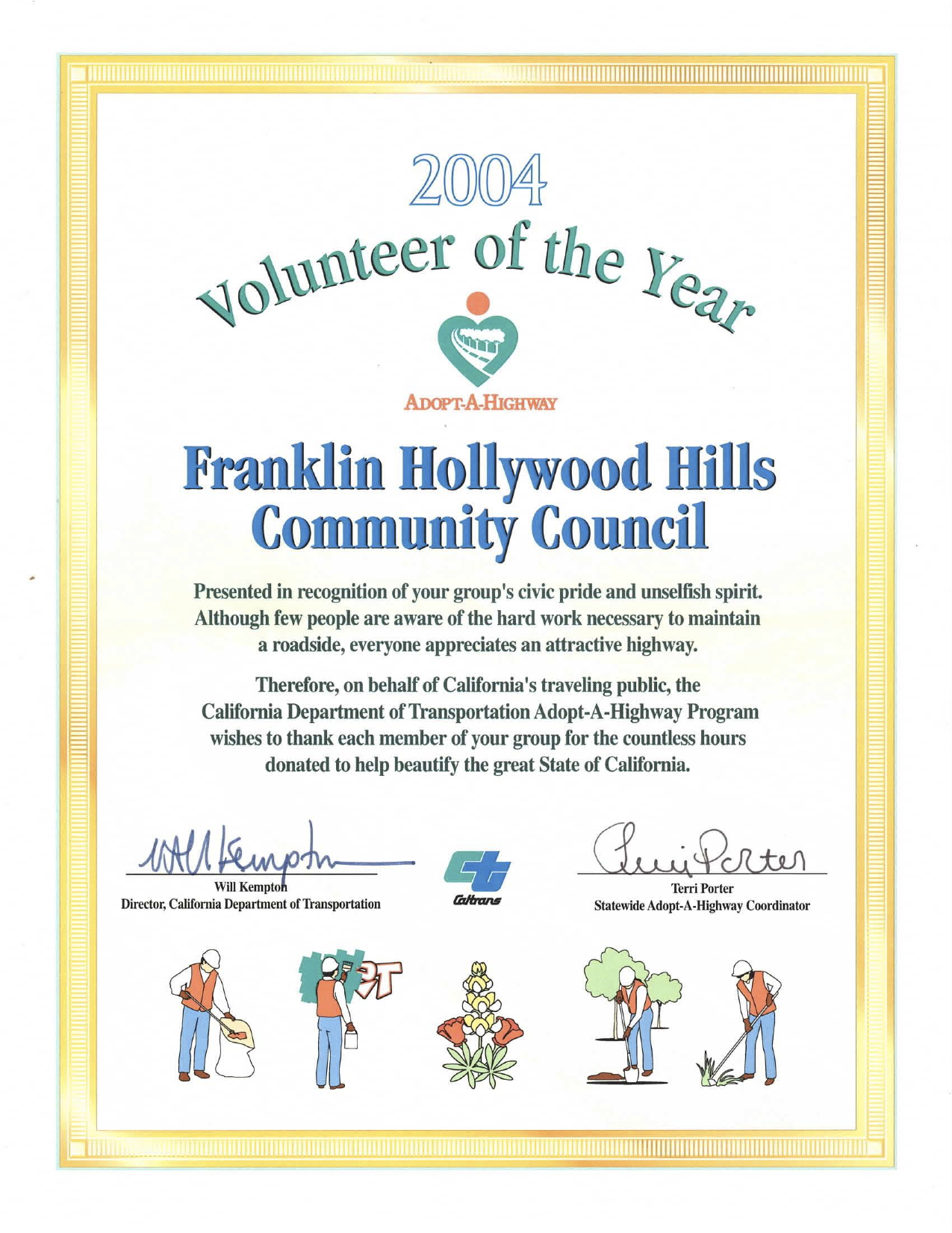
As George became more engaged in city and state matters, he found himself increasingly drawn to local planning and land use issues. Witnessing repeated abuses of power in planning, zoning, and housing, he could no longer remain on the sidelines. Over the years, George served in numerous leadership and advocacy roles: member of the Franklin Hollywood Hills Community Council, Stakeholder Member of the Planning and Land Use Management Committee of the Central Hollywood Neighborhood Council, President of the Argyle Civic Association, board member of the Los Angeles Area Helicopter Noise Coalition, co-founder of the Beachwood Canyon Neighborhood Association, and chair of the Legal Committee of SaveHollywood.org. He worked closely with residents and neighborhood groups to file appeals and lawsuits challenging the city’s violations of planning and zoning laws.
One of his proudest accomplishments was halting a massive Hollywood skyscraper project slated for construction on an active earthquake fault. George’s efforts stopped the dangerous development and drew international attention to questionable practices at Los Angeles City Hall. In 2015, his campaign succeeded in getting the project officially thrown out, marking a major victory for public safety and government accountability. Here is a powerful news clip of George celebrating a landmark victory.
After the initial project was thrown out, the developer Millennium Partners filed a second application in an attempt to revive the project. The organization George co-founded and led, Stop The Millennium Hollywood (STMH), continued the fight. Thanks to STMH’s relentless advocacy, including demands that the developer conduct proper trenching in key areas of the site (which Millennium had long tried to avoid), the second application was eventually withdrawn. A Public Records Act (PRA) request also uncovered damning documents the developer never intended for the public to see, further validating the community’s concerns.
In May 2018, George was seriously injured after being hit by a FedEx truck while crossing the street. For nearly three years, George valiantly fought to recover. He passed away on February 3, 2021.
Throughout his life, George challenged powerful interests not with wealth or influence, but with persistence, integrity, and a deep sense of civic duty. Where others saw lost causes, George saw unfinished business. His fierce advocacy and tireless work protected not only his own neighborhood, but the safety and rights of residents across the city. Our community misses his sharp mind, steady guidance, and unwavering courage. His absence is acutely felt, but his legacy continues to guide and galvanize those committed to justice and accountability in public policy, the environment and all things in it.
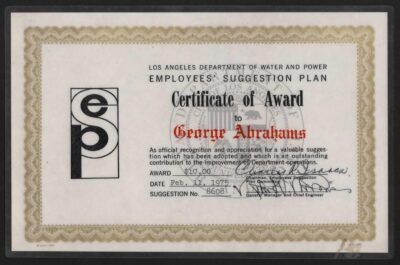
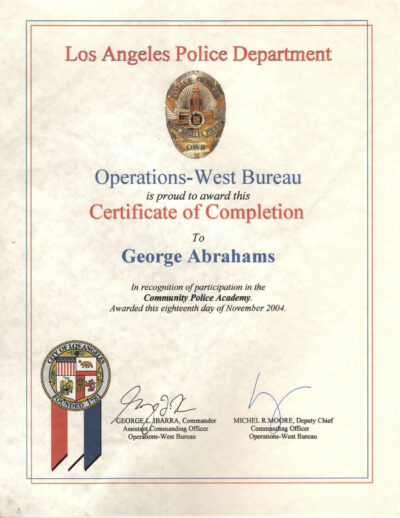
Check Out Just a Few of the Achievements and Recognitions
George Was Awarded Below

Some of George’s Most Notable Cases
StopTheMillenniumHollywood.com v. City of Los Angeles, et al.
LASC CASE #: BS144606
LASC CASE #: BS144606
In 2012, George founded Stop the Millennium Hollywood (STMH) in response to New York-based developers Millennium Partners filing an application to build skyscrapers near the historic Capitol Records building, just north of Hollywood Boulevard and Vine Street. The proposed project violated multiple laws, including the California Environmental Quality Act (CEQA).
The trial court ruled that the Environmental Impact Report (EIR) failed to “present any concrete project proposal” and obstructed meaningful public participation. The City and developers appealed, but the Court of Appeal upheld the ruling and denied their appeal. The decision became a published opinion and was incorporated into the 2020 CEQA Guidelines (page xxxiii).
The StoptheMillenniumHollywood.com v. City of Los Angeles case set significant legal precedents under CEQA:
- Clear project descriptions required: Developers must provide specific project details, not just flexible concepts or “impact envelopes.”
- Public participation protected: Vague or conceptual proposals cannot bypass public scrutiny. Communities have the right to participate, understand, and challenge developments that may significantly impact their neighborhoods.
- Statewide policy influence: The case established precedent that speculative, open-ended project descriptions are legally insufficient under CEQA. As cited in the 2020 CEQA Guidelines, agencies and developers must provide concrete, buildable plans rather than hypothetical possibilities.
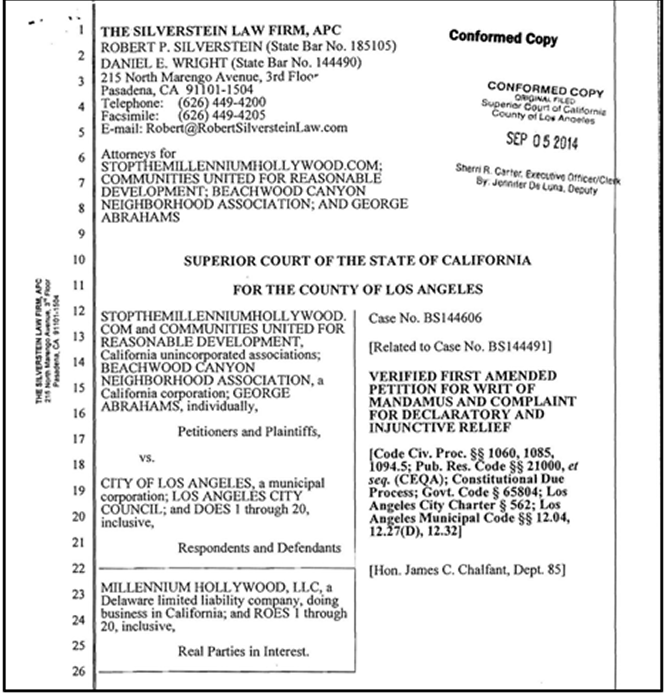
Check out the STMH website for a timeline of events and filings

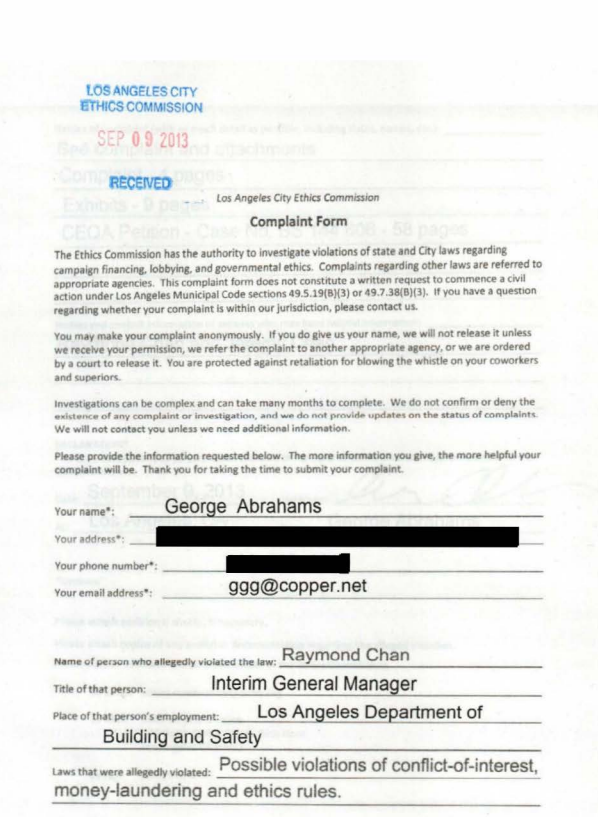
The STMH case exposed corrupt conduct by the City, including a particularly troubling conflict of interest involving former Los Angeles Department of Building and Safety (LADBS) General Manager Raymond Chan. While Chan’s department reviewed and approved seismic studies for the Millennium project, his son was receiving payments from Millennium Partners’ law firm.
After painstakingly putting all the pieces together, George filed a complaint with the Ethics Commission. The agency took no action. Ten years later, in 2023, a federal jury found Raymond Chan guilty of racketeering and conspiracy for his role in a sweeping corruption scheme tied to real estate development in the City. Chan’s conviction, following an indictment by the FBI, exposed systemic corruption at the highest levels of City Hall.
What would have happened had the Ethics Commission taken George’s 2013 complaint seriously?
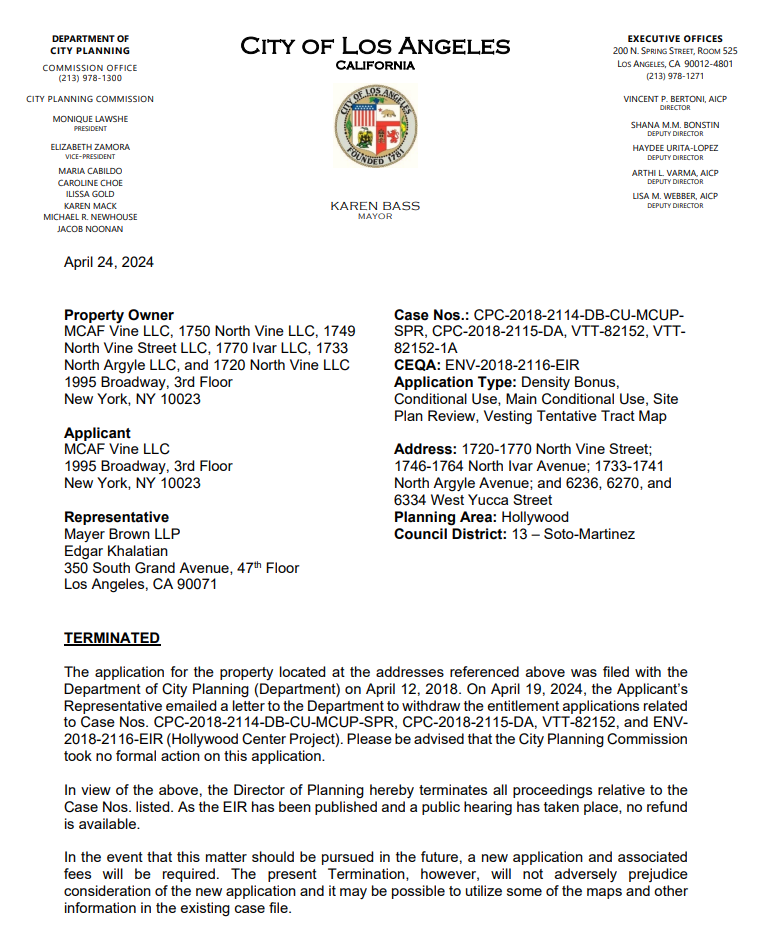
In 2018, Millennium took a second bite at the apple attempting to build skyscrapers directly atop an active earthquake fault in the heart of Hollywood. Operating under a new name (MCAF Vine, LLC), they rebranded the controversial proposal as the “Hollywood Center Project.”
Despite serious public concerns, the DCP released the Draft Environmental Impact Report (EIR) during the height of the COVID-19 pandemic in 2020. The agency denied multiple public requests to extend the comment period or hold additional hearings. Prior to any formal proceedings, STMH’s attorney Robert Silverstein submitted a detailed objection letter outlining legal and procedural violations already committed.
The full extent of Millennium’s second effort to ignore seismic hazards, bypass environmental safeguards, and endanger thousands of lives is documented on the STMH website.
Here’s what happened: Millennium deliberately avoided conducting trenching studies in the precise locations where the California Geological Survey had identified active fault lines. STMH, and concerned community members pressured then Councilmember Mitch O’Farrell, repeatedly until Millennium finally agreed (or was forced) to trench in those critical areas. Still, they never tested every required location.
After the trenching in the specific locations they avoided for so many years, silence. We heard nothing from them until 2024, when Millennium’s representative quietly submitted a letter to the DCP withdrawing their application.
For those unfamiliar with Millennium Partners’ track record, consider their sinking towers in San Francisco, a disaster costing millions of dollars and endangering thousands of residents. When STMH dug deeper, they revealed serious oversights and questionable decisions were once again at play.
When no City department or elected official stood up to protect public safety or prevent a project that put thousands at risk — George did.
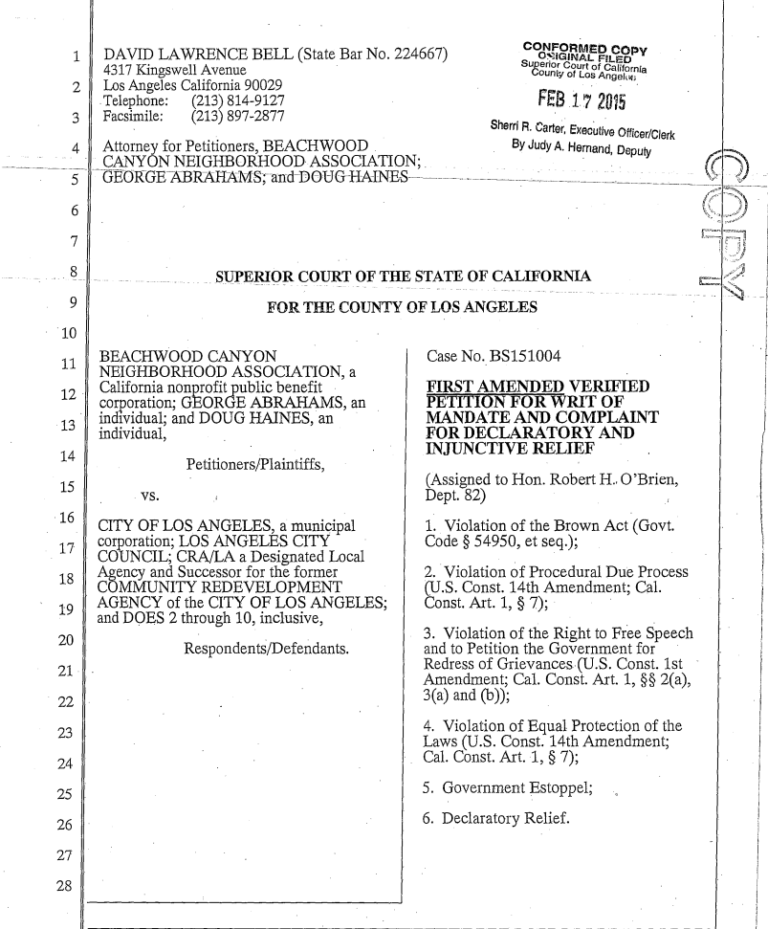
BCNA; George Abrahams & Doug Haines v. City of Los Angeles
LASC case #: BS151004 / COA # B288964
LASC case #: BS151004 / COA # B288964
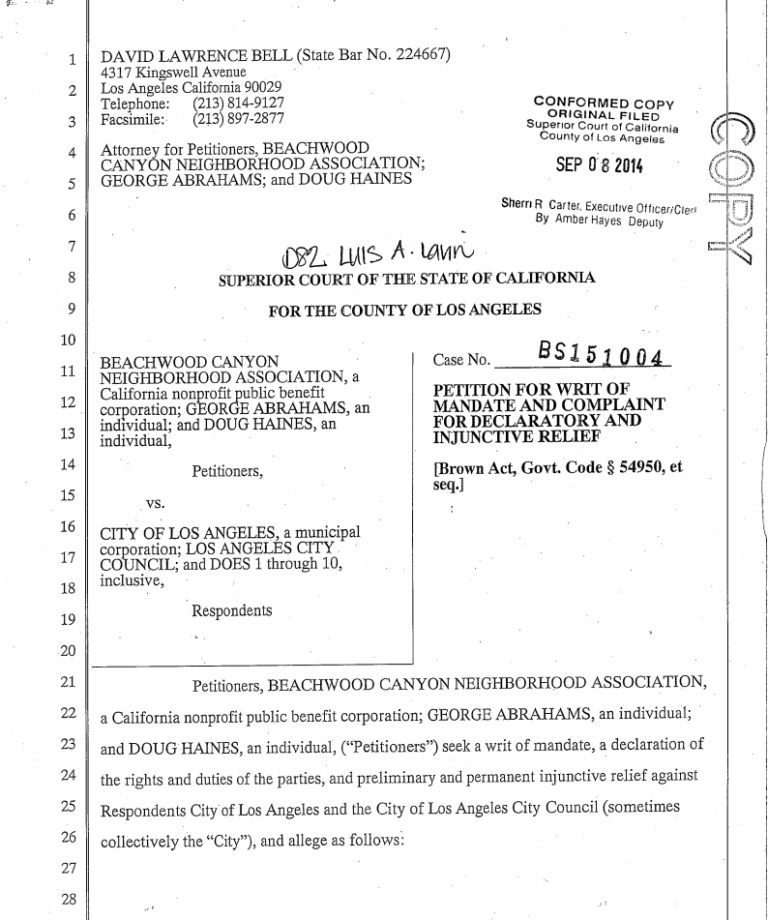
Beachwood Canyon Neighborhood Association (BCNA), George Abrahams, and Doug Haines, filed a Petition for Writ of Mandate against the City for violating the Brown Act (California’s open meetings law) and disregarding constitutional rights.
On June 26, 2014, the City barred petitioners and the public from a Hollywood Design Review Committee (HDRC) meeting, despite these meetings having a long history of open community access. The petition included six causes of action, including a request for declaratory relief, to compel the City to restore public access.
During the litigation, then–Councilmember Mitch O’Farrell publicly stated he would “not allow certain members of the public to attend HDRC meetings who expressed disagreement with government positions regarding major developments and [those who] have resorted to litigation on certain matters in their community” (FAP, 2015, p. 18). The
Petition was amended to include additional constitutional violations based on this explicit, viewpoint-based exclusion.
After the trial court wrongly concluded that HDRC was not a legislative body under the Brown Act and treated its meetings as private advisory sessions rather than public forums, the California Court of Appeal (COA) reversed that decision. While the COA did not rule in favor of the petitioners on every claim, it held that the trial court erred in granting a nonsuit on their constitutional claims, noting that excluding participants because they “disagreed” with a Councilmember or had previously sued the City could constitute unconstitutional viewpoint discrimination and retaliation. The COA further clarified that, even if HDRC meetings were not subject to the Brown Act, they still functioned as a public or limited public forum where exclusion based on viewpoint is prohibited.
La Mirada Neighborhood Assn. v. City of Los Angeles (Sunset Gordon Project)
LASC # BS137262 / COA # B259672
LASC # BS137262 / COA # B259672
George worked with neighbors from the La Mirada Neighborhood Association who were adversely impacted by the unlawful approval of the Sunset and Gordon Project, located on the historic site of the 1924 Peerless Motor Company Building. Over the decades, the building evolved into a West Coast radio station (KNX), was purchased by theatrical pioneer Max Reinhardt, and by 1976 had become the beloved Old Spaghetti Factory restaurant
In 2011, developer CIM Group purchased the property and proposed constructing a 23-story, 260-foot-tall mixed-use tower. As a condition of City approval, CIM was required to preserve the historically significant façade of the Old Spaghetti Factory. In exchange for nine land-use variances (including reduced parking requirements and spot-zoning changes) the developers agreed to “retain and restore various interior treatments to memorialize the social significance of this building as it relates to the development of the Hollywood area” (Decision, p. 1). CIM also received $9.6 million in taxpayer subsidies based on that commitment to preserve the façade. That promise was broken — and the public funds were never returned.
Despite these binding conditions, CIM obtained a full demolition permit and on February 21, 2012, demolished the entire building, including its historic façade.
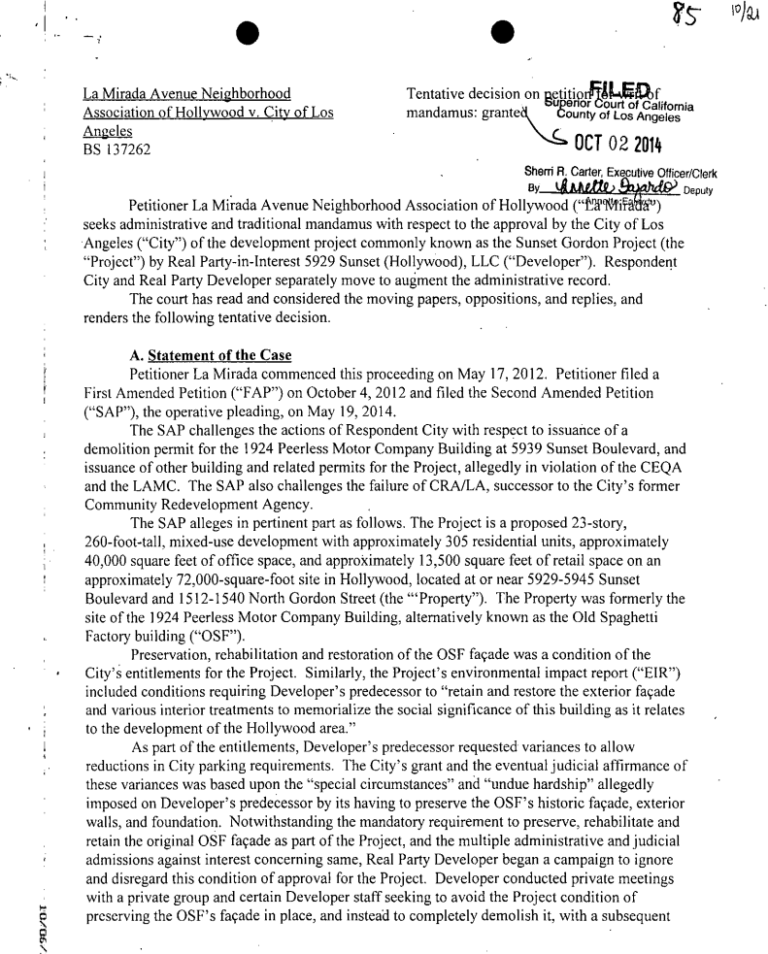
La Mirada sought to challenge the permit through LADBS, but the agency refused to provide the necessary fee information to process the appeal. Months later, LADBS dismissed the matter, claiming no violations had occurred.
La Mirada filed suit under the California Environmental Quality Act (CEQA) and the LAMC, arguing that the City’s approvals and enforcement actions were unlawful and inconsistent with the project’s preservation conditions. The court agreed, finding that both the Zoning Administrator (ZA) and the Area Planning Commission (APC) failed to perform their duty to revoke all improperly issued permits, and that the City’s permitting and enforcement actions violated LAMC § 11.02. The court ordered further review of the demolition’s legality and environmental implications.
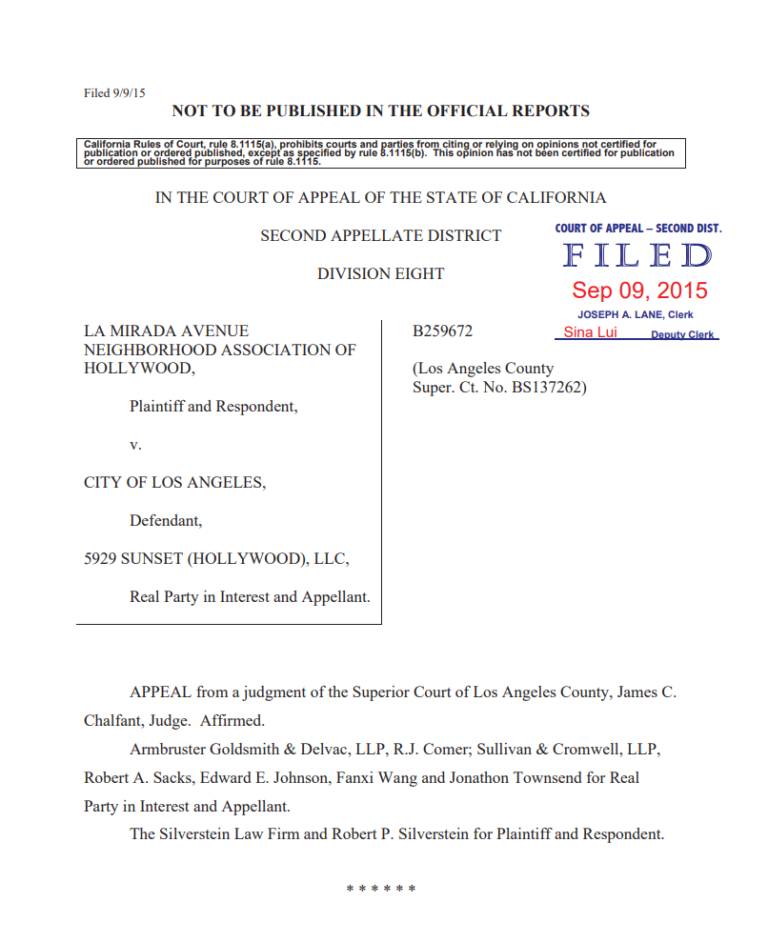
La Mirada prevailed at trial. The City and developers appealed, and lost.
This decision became one of the earliest high-profile challenges to Hollywood redevelopment approvals, marking a turning point in community efforts to hold the City accountable for its planning practices. More details on the case can be found here.
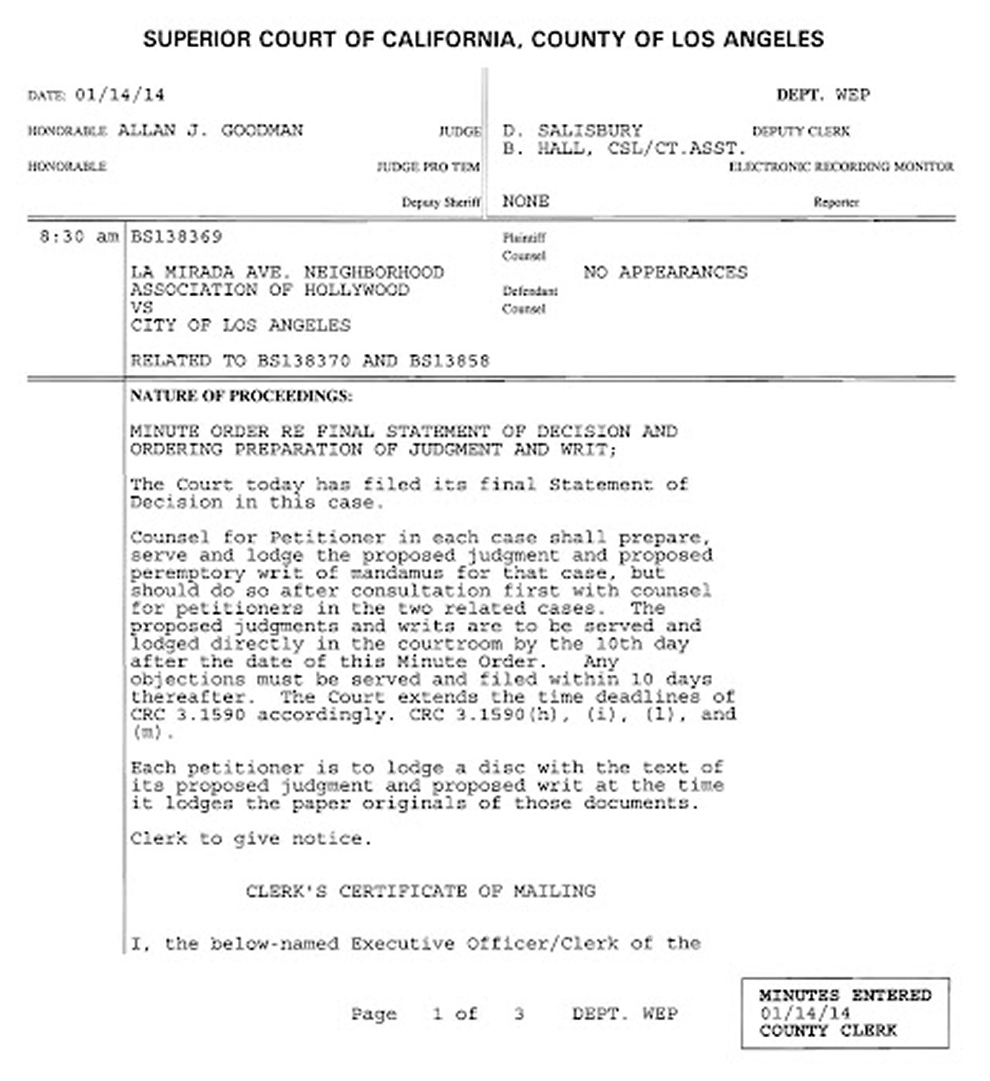
Fix the City, Save Hollywood.org, and La Mirada Ave Neighborhood Assn. v. City of Los Angeles (Hollywood Community Plan Update)
LASC case #: BS138369; BS138370; BS138580
LASC case #: BS138369; BS138370; BS138580
In 2013, George co-founded SaveHollywood.org, a community group that, together with Fix the City and the La Mirada Neighborhood Association, brought a landmark lawsuit against the City of Los Angeles challenging its adoption of the Hollywood Community Plan Update (HCPU) and its accompanying Environmental Impact Report (EIR).
The HCPU was intended to guide Hollywood’s growth through 2030 by reshaping zoning, density, and land use around transit corridors. However, SaveHollywood.Org and its co-petitioners argued that the City’s plan was based on inflated population projections, outdated data, and an inaccurate environmental analysis, all in violation of CEQA. The City relied on 2005 Southern California Association of Governments (SCAG) population estimates instead of the 2010 U.S. Census, which showed that Hollywood’s population had not grown as projected. These false assumptions misrepresented the community’s actual conditions, enabling zoning changes that would pave the way for overdevelopment without accurately disclosing environmental consequences or providing the public with an assessment of impacts.
Judge Goodman agreed.
In his January 14, 2014 Statement of Decision, the court ruled in favor of SaveHollywood.Org and the other petitioners, finding that the City’s plan and EIR were “fundamentally flawed and fatally so.” The court held that the City failed to proceed in the manner required by law, that the EIR lacked a stable and finite description of the project, and that it misrepresented key data used to justify the plan.
The court ordered the City to rescind the HCPU and all related approvals, prohibiting reliance on it until a new, legally compliant EIR was prepared and circulated. This invalidated the City’s entire long-term planning framework for Hollywood, forcing the City to restart the process from the ground up.
This decision was a critical victory not only for Hollywood residents but for communities across California, affirming that cities must base long-term planning decisions on accurate facts, legal consistency, and public accountability. It reinforced CEQA’s core purpose: to ensure transparency, informed decision-making, and public participation in development that affects the environment and neighborhoods.
Save Hollywood v. City of Los Angeles (Amended Writ)
LASC case #: BS138370
LASC case #: BS138370
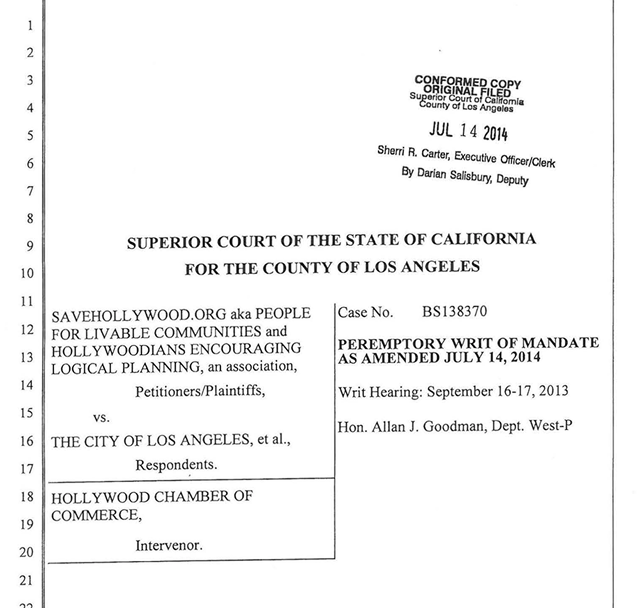
Following the January 2014 judgment that invalidated the HCPU and its Environmental Impact Report, the court issued an Amended Peremptory Writ of Mandate to formally enforce its decision and ensure compliance by the City. The writ ordered the City to rescind, vacate, and set aside all actions approving the HCPU, including the EIR certification, zoning changes, amendments to the City’s General Plan, and all other approvals issued in furtherance of the plan.
The City was prohibited from granting any permits or entitlements derived from the invalidated plan until a new, legally adequate environmental review was completed. The court also required the City to submit a return within 90 days, detailing the steps it had taken to comply with the order, and reserved jurisdiction to monitor ongoing compliance.
This ruling represented the final enforcement action in the SaveHollywood.Org litigation and solidified the earlier victory. It ensured that the City could not move forward with new development projects under a defective planning framework. The decision reinforced that environmental review must be grounded in accurate data and lawful procedure, and that public participation and transparency are non-negotiable elements of city planning under CEQA.
The SaveHollywood.org cases collectively became a defining precedent for community-driven land-use accountability in Los Angeles, affirming that even large-scale urban planning efforts must adhere to environmental law and factual integrity.
George Abrahams v. City of Los Angeles, et al. (Brown Act & City Council Rules)
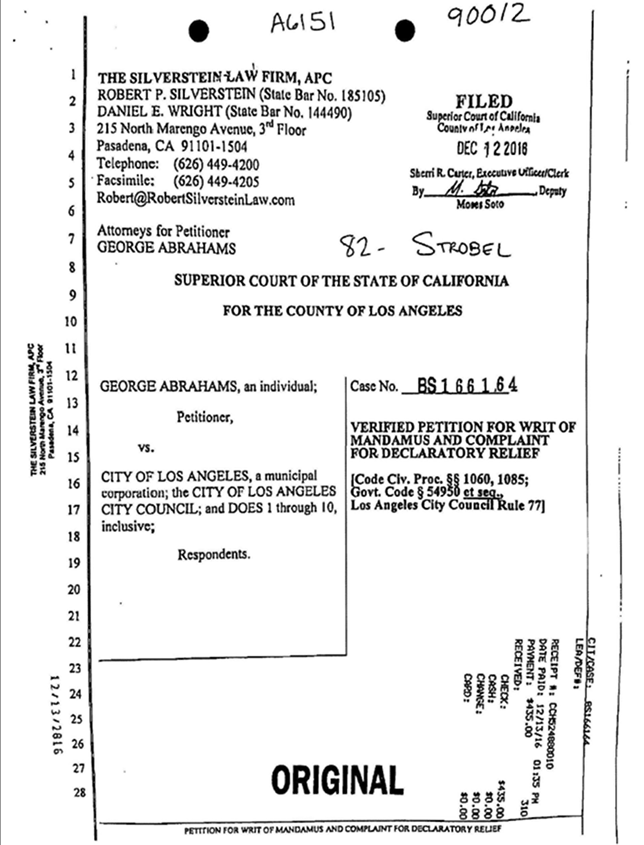
In 2016, George filed a Brown Act lawsuit against the LA City Council after they pushed through changes to public comment rules without notice or allowing public input. The City violated multiple Brown Act provisions by denying speakers the right to comment at a special meeting, adopting vague and misleading agendas, and creating a system that silenced frequent critics. The case spanned nearly four years of litigation, continuing for more than two years after George’s 2018 accident as the City repeatedly fought the claims.
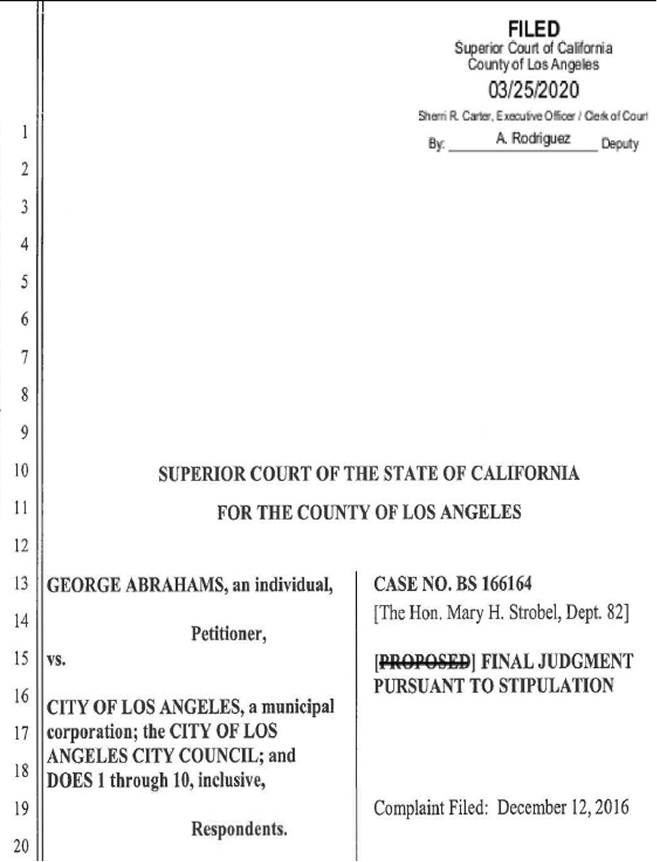
In 2020, the trial court entered judgment partially in George’s favor, finding that the City violated Government Code § 54954.3(a) by failing to allow public comment at the September 30, 2016 special meeting (See Council File 16-1104).
The outcome reinforced that open government laws apply equally to local councils, regardless of political expediency, cementing George’s legacy as a persistent advocate for transparency, due process, and the public’s right to be heard.
Hollywoodians Encouraging Rental Opportunities (HERO) v. City of Los Angeles, et al. (CEQA & Ellis Act)
LASC case #: BS163828
LASC case #: BS163828
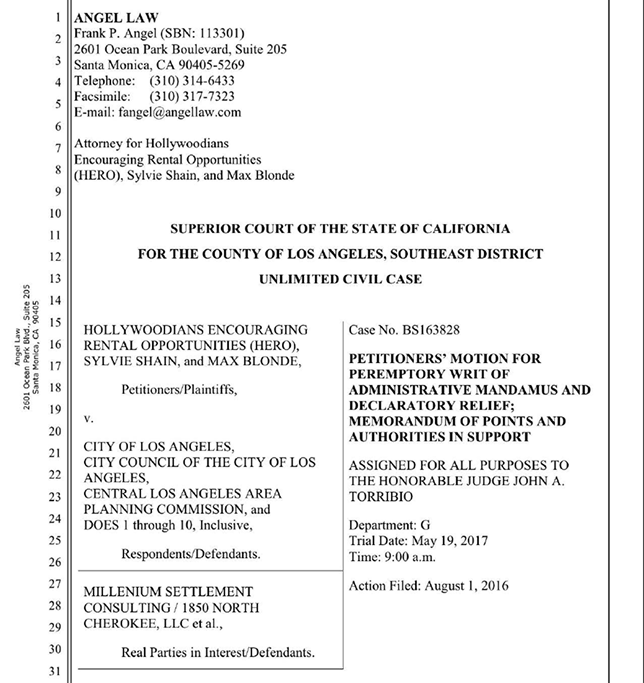
Alongside two other residents, (HERO) filed suit against the City after then–Councilmember Mitch O’Farrell (CD13) approved the evictions of 18 families and the removal of 18 rent-stabilized apartments to convert the property into a 24-room boutique hotel, without public participation and in violation of CEQA. The City failed to assess the cumulative environmental impacts of the project, including the displacement of tenants and the permanent loss of existing RSO housing.
While the courts found the City’s actions consistent with CEQA’s technical requirements, the decision exposed a dangerous loophole. By allowing the environmental baseline to be measured after tenants have been evicted, developers and the City can circumvent CEQA’s disclosure requirements by clearing rent-stabilized buildings before environmental review begins.
Once the property is vacant, the City can legally claim “no displacement impact,” even when the displacement has already occurred as part of a coordinated redevelopment effort. This is a precedent that enables piecemeal evictions and the quiet erosion of existing RSO housing outside the reach of environmental scrutiny.
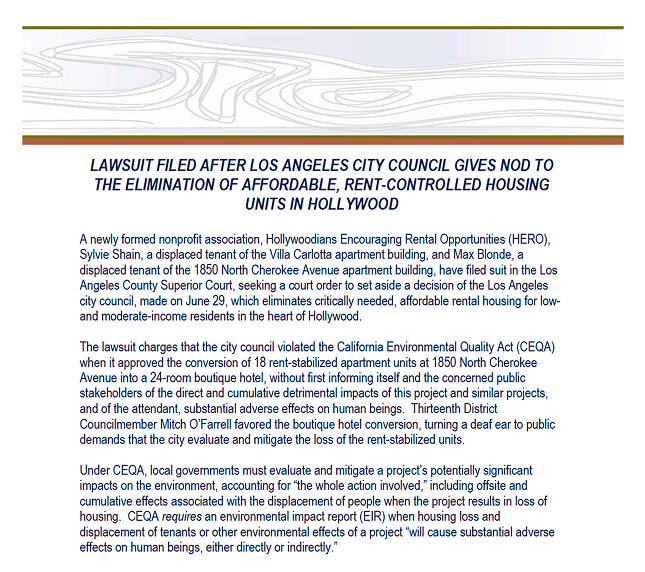
This case drew significant statewide attention, with amicus briefs (legal filings submitted by non-parties) filed in support of HERO by Advocates for the Environment, Western Center on Law & Poverty, National Lawyers Guild, Hayward Area Planning Association, Urban Displacement Project and UCLA attorney Sean Hecht. They warned that the ruling undermines CEQA’s core purpose (transparency, accountability, and protection of communities most vulnerable to displacement) and urged the California Supreme Court to close the loophole. The Court declined review, but the case remains a pivotal example of how Ellis Act evictions intersect with environmental law and housing justice.